html5 templates

Research

Research identifies and develops new capabilities. It ranges from the conception of completely novel ideas, through feasibility studies, proof-of-concept demonstrators, to business venture prototypes and incremental improvements to mission proven systems.

The maturity of any research is benchmarked by its step on the Technology Readiness Level (TRL) scale. These steps have strict definitions; the scale ranges from TRL1 for novel conception to TRL8 for mission proven systems. Lower TRL research is conducted usually by universities and research centres. Higher TRL research is carried out by commercial companies, sometimes outsourced to other institutes.

Public sources of funding can be available for funding research between TRL1 and TRL4. Companies normally fund TRL of six and above, when low-risk routes to market are identified. Total costs involved in transiting a step on the TRL scale increase by an order of magnitude for each step. 

Projects below build on peer-reviewed work to date and on-going dynamic research activities, driving forward technology and techniques on a number of fronts simultaneously. Projects may run from short 3-month contracts, through PhD studentships, to long-term research and development programmes.

Mobirise

Stand-Off Security Screening

Investigate full polarimetric radar to screen individuals and their bags for weapons at proximity using hand-held systems and out to tens of metres using gimbal mounted systems linked to video cameras. The technique (whereby a coherent electromagnetic wave is transmitted to the subject and the reflection measured) enables larger amounts of information to be gathered than with an intensity polarimetric radar or a passive (ie radiometric) polarimetric system. This is critical in a regime where spatial information content (limited by diffraction) is low and where the passive signature from threats is very much smaller than the background emission.

Synthetic data created using Finite Difference Time Domain (FDTD) techniques shows how a polarimetric millimetre wave radar probes a human torso for concealed threats. The technique is suitable for screening both people and their baggage, either together or separately.

Hardware to develop these systems is now considerably lower cost than it was several years ago due to the availability of subsystem modules (at 24, 60, 77, 120 GHz) developed for the automotive radar and communications industry. Demonstrator systems can now be constructed that are compact and operate with wide radiation bandwidths (few GHz) to maximise information capture, and signal bandwidths (few MHz) to minimise the effects of aliasing.

Spin-outs: The polarimetric sensor concept will have applications in other areas, where object recognition is paramount, such as medical screening, self-driving cars, landmine detection, area/building security sweeping and non-destructive testing.   

Mobirise

Portal Security Screening

Investigate aperture synthesis image generation algorithms for three-dimensional imaging of subjects in walk-through, high-performance airport security screening portals. Algorithms are already available to generate cross-correlations from three-dimensional subjects carrying threats and the Gerchberg-Saxton technique can be used to invert these to generate a 3-D image of the original subject. The field-of-view and depth-of-field of this technique is unlimited, so all threats are in focus, ideally suited to walk-through security screening portals. Radiometric aperture synthesis (a technique from radio astronomy) has the capability to deliver artefact free, machine-interpretable imagery of threats concealed in areas of the body that are normally difficult to screen using conventional coherently illuminating millimetre wave systems.

Being able to identify non-metallic threats concealed anywhere on the human body, rapidly and efficiently, is ideal for airport security and will lead to spin out products for other deployment scenarios (e.g. entrances to public transport systems, buildings, arenas etc.). The measured signature, being a combination of known reflectance and thermal emission from the human body, means this screening technique is virtually impossible to defeat. The system hardware for aperture synthesis imagers will be heavily dependent on millimetre wave receivers linked to FPGA based digital cross-correlators running at GHz sample rates. Aperture synthesis image creation algorithms can be investigated using existing validated forward simulation software, whilst hardware for portals is developed in parallel.
Mobirise

High-speed digital (FPGA Interface/Processing)

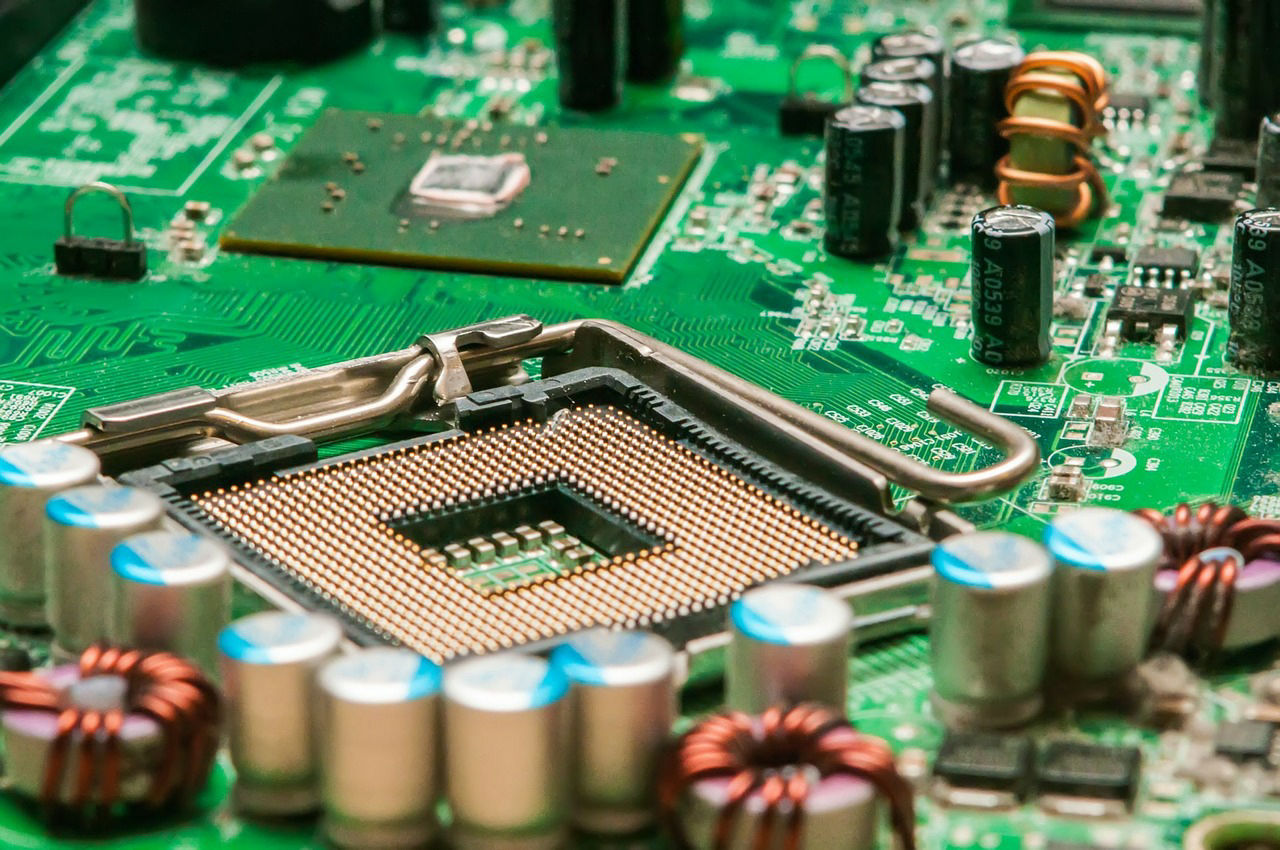
 Investigate how Field Programmable Gate Arrays (FPGAs) can interface to phase locked digital millimetre wave receivers, to sample and process data at GHz rates for next-generation aperture synthesis imaging, radar sensing and quantum applications. Digital receivers would use single-bit (comparator) or short word (<4 bits) digitisation at ~ 1 giga sample per second, to achieve large radio frequency bandwidths (>0.5 GHz). FPGAs could then import the high data rates using their serial inputs and form the cross correlations and generate real-time interferometric imagery.

Opting for short words enables large bandwidths to be realised at much reduced cost, resulting in greater sensitivities and information gathering capacities. These developments will revolutionise millimetre wave sensing capabilities, so they can be widely deployed in market-driven applications of security screening, all-weather imaging and research into medical and quantum applications.

Mobirise

Scene Simulation

Investigate full polarimetric ray-tracing algorithms and processing in Graphical Processor Units (GPUs) to enable high-speed scene simulations, including the effects of scattering and semi-transparency of materials for active and passive imaging in air, sea, land and space scenarios. Simulation avoids having to conduct lengthy and expensive trials and experiments, applications include:

* Portal and stand-off security screening of persons
* All-weather imaging in fog/cloud:
- Landing aircraft/helicopters close to obstacles (vision through brownout)
- Sea vessel littoral manoeuvre in coastal fog (a capability gap of IR/visible imagers)
- Warnings of approaching small (RIBs) sea craft (ship radar cant detect these)
* Vehicle screening at ports for stowaways
* Mail package screening using radar
* Hypersonic missile, launch/plasma plume detection
* Satellite-based earth observation (through cloud).
* Submarine wake detection.

Simulations are an excellent way of illustrating how phenomenology changes through the different atmospheric transmission windows (eg. 35, 94, 140 & 220 GHz) and absorption bands (at 60 & 183 GHz). Much experimental imagery has validated the simulation techniques. The models estimate the radiometric emission, reflection and transmissions of all materials (eg. clothing, plastics, ceramics, metals, explosives and plasmas), considering their physical (aka thermodynamic) temperatures and environmental illumination. Radiation transport then propagates these target signatures through the atmosphere to the imager location.  

Mobirise

The High North

Monitor activity around the globe using satellite-based millimetre wave radiometric imagers. Above is a scene simulation of the surface of the earth, as imaged using a four-metre aperture 35 GHz radiometric imager at an altitude of 20,000 km above the North Pole. The simulation code uses radiation transport through the earth atmosphere and Fresnel reflections and scatterings from different types of object and materials, eg, threats, space debris (cosmic fly-tipping), air-polition, smoke, oil slicks, water, wakes, ice, and land to predict signatures.

Mobirise

Submarine Wakes

Investigate the characteristics of wakes from different types of submarines (eg narco subs, mine sweepers, unmanned underwater vehicles (UUV) with malicious intent) and use scene simulations to predict how wakes appear in radiometric images. Use Havelock sources as an efficient way to estimate water surface displacements from moving submerged craft. Analysis of the wake image indicates the size, depth and speed of the submerged craft. Above shows some of the phenomenology associated with submarine wakes.


More projects:

Mobirise

Machine Learning for target identification

Investigate machine learning to classify targets from millimetre wave sensing metrics. The 'democratisation' of machine learning through Python modules available in Scikit-learn, TensorFlow and PyTorch now enables anyone to perform target classifications from measurements. The huge range of classical machine learning algorithms and neural network architectures has brought enhancements to many fields of sensing.

The confusion matrix presents the target classification performance, calculated by model training followed by validation using data that was not in the training data. The matrix diagonal represents the probabilities of correct classifications, whilst the off-diagonals represent the mis-classification probabilities. Synthetic data can be created using scene simulation and Finite Difference Time Domain (FDTD) software.  

A normalised confusion matrix is shown above, where there are six classes of threats concealed under a person's clothing and one class of a divested subject, the overall classification accuracy being here 85%. Classification only takes a fraction of a second, impossible using a human operator, even with unlimited time. The technique is equally applicable to other fields of millimetre wave sensing and targeting, only requiring high-quality training data. 

Mobirise

Medical Sensing

Investigate the signatures of human skin and tissue in healthy and unhealthy states and determine how these may be measured with precision for medical applications. Signatures already measured show healthy tissue to have a range of emissivities dependent on the area of the body and the cardiovascular state. Unhealthy or diseased skin, or a state of (Covid-19 induced) high fever, has signatures outside these ranges. This has both medical and safety implications.

A diversity of imaging and sensing techniques can be used on the skin, such as electronic beam-forming, quasi-optical imaging and near-field scanning microscope probes. Lateral and depth spatial resolutions (dependent on wavelength and tissue electrical properties), are down to ~0.1 mm in the millimetre wave band. These resolutions will extend down to a depth of ~ 1 mm into the skin, with greater penetration possible at frequencies below the millimetre wave band (< 30 GHz).

Measured signatures over the microwave and millimetre wave band contain information about skin water and electrolyte content, granularity, layer structure, internal temperature profile, heart rate and blood circulation. Measurements over specific areas of the body, or the whole of the human body, will be a completely novel diagnostic technique, revealing new information about the state of patients' health. It will lead to new sensing modalities in medicine, either as a stand-alone system, or in conjunction with other medical sensing techniques.

Mobirise

Quantum Sensing

Investigate if quantum entanglement may be demonstrated in the Rayleigh-Jeans (RJ) regime, a domain where the thermal energy kT is greater than the photon energy hf. Since the 1980's entanglement has been researched in the quantum regime, that being where the photon energy is greater than the thermal energy (hf>kT), a restriction to frequencies above 6 THz, which includes the visible band, where the majority of quantum experiments are conducted.

An objective here is to develop a novel ambient temperature mm-wave Bell Test based on a parametric amplifier and a homodyne interferometer. This will demonstrate how entangled millimetre wave photons can be exploited when their energy levels are below those of the Johnson and Shot noise. The system is an embodiment of the continuous variable quantum architecture, which cannot be reproduced at higher, infrared and optical, frequencies, as signal and idler photon intensities are too weak to induce nonlinear behaviour in optical crystals. In the millimetre wave band this can be done using off-the-shelf components.

Sensors based on R-J entanglement may lead the way to novel sensors in the millimetre wave band that can deliver quantum capabilities below the level of thermal noise. The technique will have applications in novel imaging, covert radar and secure communications. A goal here is to develop a proof-of-concept short-range (few metres) millimetre wave quantum radar, to confirm or refute predictions about the performance of this next generation technology. Applications development will then build on the new knowledge gained from the proof-of-concept system.

Candidate non-linear materials/devices as a source of entangled mm-wave photons are ferroelectrics, ferrimagnets, electro-optic crystals / semiconductors junctions, acousto-optic crystals and metamaterials built from these. The probability of entangled photon generation scales with the fourth power of frequency for spontaneous parametric down-conversion (SPDC). Therefore, only extremely non-linear devices will make suitable sources of entangled mm-wave photons. However, those identified may enable quantum sensor capabilities to surpass those of classical when the entangled photon beam power dominates the thermal noise.  

Mobirise

Non-Destructive Testing

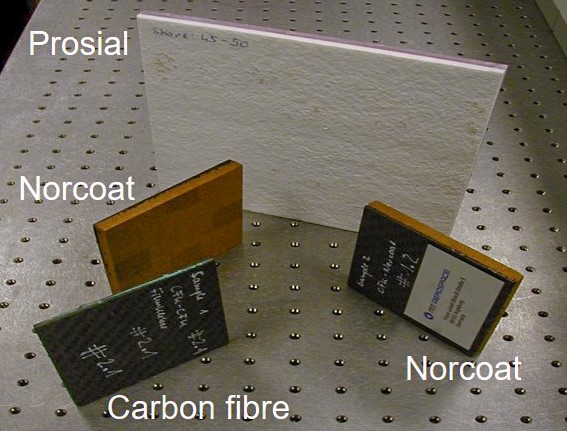
The penetrative capabilities of millimetre waves enable surface and subsurface defects of materials to be probed. These might be obscured in other spectral regions due to the material opacity or the shorter wavelengths of the probe beams. Fractures, delaminations and cavities in material structures can be revealed by millimetre wave spectroscopy and polarimetry, using stand-off imaging or near-field microscope techniques.

Mobirise

Plasma diagnostics

Active and passive millimetre wave sensing of electrons in nuclear fusion plasmas enables particle densities and temperatures to be measuredRevealing localised magneto-hydrodynamic (MHD) activity and energy loss mechanisms. Due to the confining magnetic fields, the reflected and radiometric millimetre wave radiation from the plasma is rich in polarimetric information.  

Mobirise

Landmine detection

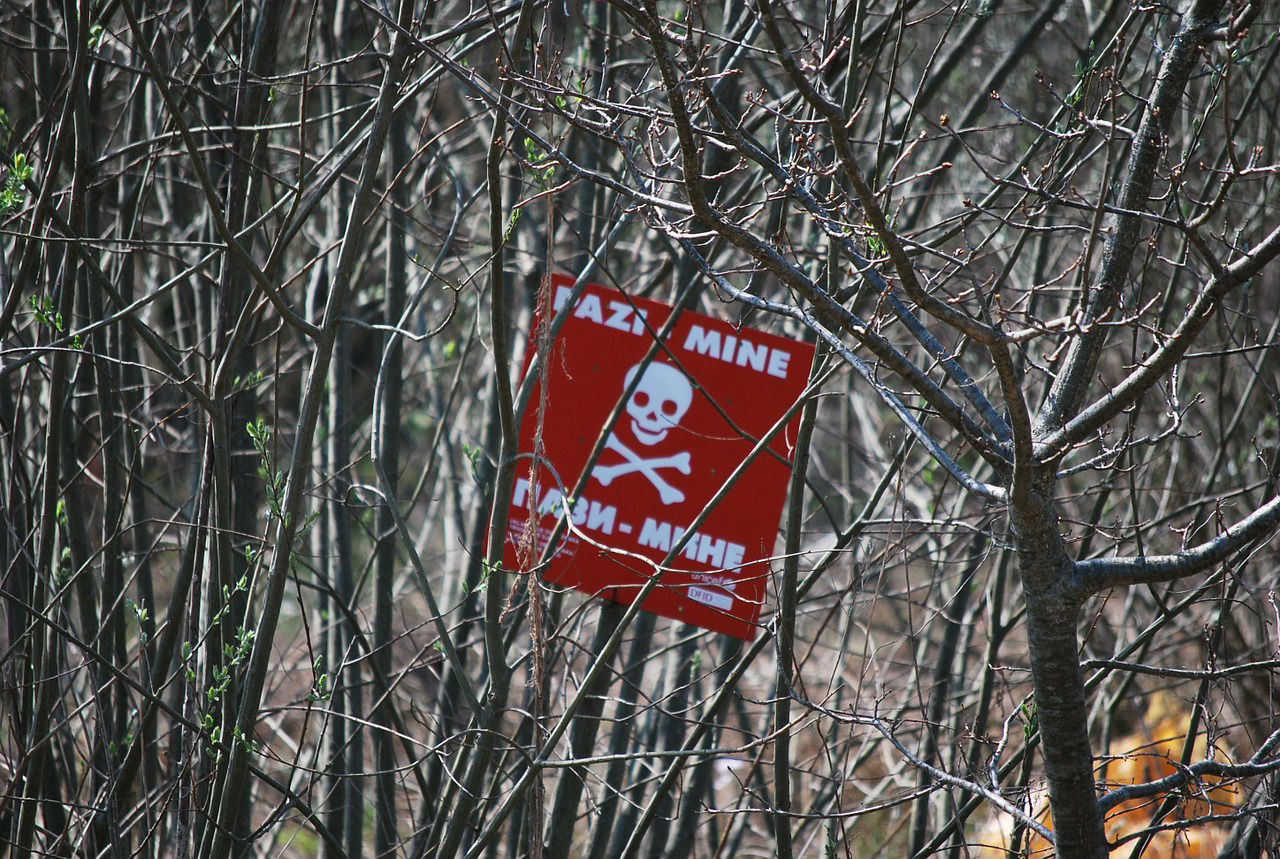
Surface and subsurface detection of metal and non-metallic landmines.


More projects:

MMW Sensors Ltd. Company No. 07865375 registered in England and Wales (VAT No. 471 4758 70)